Shell PEL 39 Namibia: Discoveries, a $400M Writedown, and the April 2026 Comeback
Shell's PEL 39 license in Namibia's Orange Basin has had more twists than any other exploration block in Africa. Three consecutive discoveries between 2022 and 2024. A $400 million writedown in January 2025 that rattled the entire investment community. And now, with Shell contracting the Deepsea Mira rig to drill at least one new exploration well on PEL 39 from April 2026, it is one of the most closely watched drilling programmes in Africa this year.
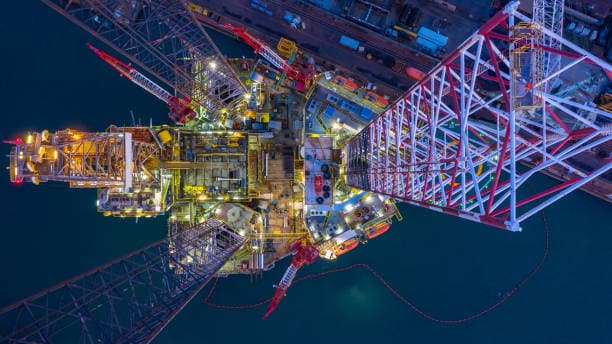
Orange Basin, offshore Namibia. Shell's PEL 39 discoveries sit here, and the April 2026 drilling campaign is now weeks away.
Track the April 2026 Results as They Drop
Stamper Oil & Gas holds positions adjacent to the Orange Basin and the Walvis Basin. Shell's April 2026 results directly impact the investment case for neighbouring blocks.
REQUEST INVESTOR INFORMATION →PEL 39 at a Glance
What PEL 39 Is and Why It Matters
PEL 39 covers a large tract of ultra-deepwater acreage in Namibia's Orange Basin, roughly 300 kilometres west of the Namibian coastline. Water depths run between 2,500 and 3,000 metres, comparable to the deepest producing fields in Brazil and the Gulf of Mexico. The license is jointly held by Shell (45%, operator), QatarEnergy (45%), and NAMCOR, Namibia's national oil company, on a 10% carried interest basis.
PEL 39 sits within the same geological province as TotalEnergies' Venus discovery to the south (PEL 56) and adjacent to several junior exploration blocks in both the Orange and Walvis Basins. Success in PEL 39 validates not just Shell's position but the entire Namibia deepwater oil system. This is why the April 2026 drilling results are being watched so closely across the entire investment community.
For context on how PEL 39 fits into Namibia's broader license map, see our guide to Namibia oil companies, blocks and ownership.
The PEL 39 Discovery Timeline: 2022 to 2024
Shell made three successive hydrocarbon discoveries on PEL 39 in a three-year period. Each well confirmed the presence of oil and extended the known play fairway across the block.
Graff-1
2022 | First discovery on PEL 39
Graff-1 was Shell's first major Orange Basin success. The well encountered significant hydrocarbon accumulations, with Shell estimating approximately 2 billion barrels of oil in place across the Graff complex. The discovery put Namibia firmly on the global oil exploration map and triggered intense interest from major operators and junior explorers alike.
Source: Shell operational updates 2022. In-place volumes; recoverable estimates subject to appraisal.
La Rona-1
2023 | Appraisal confirms continuity
La Rona-1 was drilled to appraise the extent of the PEL 39 petroleum system and confirmed that hydrocarbons were not limited to the Graff structure. The well encountered oil-bearing reservoir sands, extending the proven fairway across a broader area of the block and confirming continuity of the petroleum system across PEL 39.
Jonker-1
2024 | Third accumulation confirmed
Jonker-1 discovered an additional hydrocarbon accumulation on PEL 39, separate from the Graff complex. This showed that PEL 39 contains multiple independent oil-bearing structures rather than one single large field. Multiple accumulations increase development options but also complicate the decision about which structures to prioritise for an FPSO tie-back.
For a broader timeline of how PEL 39's discoveries fit into Namibia's overall exploration history, see our Namibia oil discovery timeline.
January 2025: The $400 Million Writedown
In January 2025, Shell announced a $400 million impairment on its PEL 39 exploration assets. The announcement stated that the Namibia discoveries were not commercially viable under then-current oil prices and technology. For investors who had followed the three successful discovery announcements, it was a significant shock.
The Two Technical Problems Shell Cited
1. Lower-than-expected rock permeability
Permeability is the measure of how easily oil flows through reservoir rock. Shell's appraisal drilling found that the Graff complex reservoirs had permeability lower than the initial discovery data suggested. In practical terms, oil in the reservoir is present but would not flow to a producing well at rates sufficient to justify the capital cost of deepwater infrastructure. Improved technology or higher oil prices could change this assessment, but as of early 2025, the economics did not work.
2. Higher-than-anticipated natural gas content
The PEL 39 reservoirs contain more dissolved and associated natural gas than the initial well data indicated. This is a commercial problem specific to offshore Namibia because no gas export infrastructure exists: no pipelines to shore, no LNG terminal, no domestic gas market of any scale. Operators cannot currently monetise gas from the Orange Basin, so high gas content adds handling cost without adding proportionate revenue.
The writedown was a statement about the commercial viability of the already appraised portions of PEL 39 under the cost and price conditions of early 2025. It did not mean PEL 39 contains no oil. Three wells had already confirmed it does. It did not mean Shell was exiting Namibia. And it had no bearing on TotalEnergies' Venus or GALP's Mopane, which sit in different geological settings and had been independently appraised with positive results.
For a deeper breakdown of the financial and geological implications, see our Shell Namibia writedown analysis.
Don't Miss the April 2026 Drill Results
Stamper Oil & Gas holds carried interests in blocks adjacent to the Orange Basin. Shell's April results will be a major catalyst. Get our investor updates delivered as results are announced.
April 2026: Why Shell Is Drilling Again
Despite the writedown, Shell contracted the Deepsea Mira semi-submersible rig to drill one firm exploration well on PEL 39 from April 2026, with an option for a second well. For investors, the obvious question is: if the existing discoveries are not commercially viable, why return to the same block at all?
Four things explain it.
1. The appraised areas are not the whole block
Graff, La Rona and Jonker represent a fraction of PEL 39's total acreage. Seismic surveys across the block have identified multiple additional structural highs and amplitude anomalies that have not yet been drilled. Some of these untested prospects may contain reservoirs with better permeability and lower gas content than the Graff complex. The only way to know is to drill them.
2. Better reservoir quality may exist in different targets
The Orange Basin is not geologically uniform. Different structural positions and different stratigraphic intervals can have very different reservoir properties. Shell's technical teams have identified targets that may intersect higher-quality reservoir rock, including shallower Cretaceous sands or different structural configurations, that could avoid the permeability problems seen at Graff.
3. License work commitments
Exploration licenses in Namibia require operators to meet minimum work programme commitments, typically a specified number of wells within defined licence sub-periods. Shell's April 2026 wells may partly be fulfilling these obligations while also pursuing commercial upside.
4. QatarEnergy continues its commitment
QatarEnergy, which holds 45% of PEL 39 alongside Shell, has continued to co-fund the April 2026 programme. Qatar's national oil company has been one of the most active acquirers of African deepwater exploration acreage since 2021, and its continued participation is a clear signal that the Orange Basin thesis remains intact for at least one major state oil company.
For a detailed breakdown of what Shell is likely targeting with the April 2026 wells and how to interpret the results, see our dedicated Shell April 2026 Namibia drilling guide.
PEL 39 vs. Venus and Mopane: How They Compare
PEL 39 is frequently grouped with TotalEnergies' Venus and GALP's Mopane as part of Namibia's Orange Basin story. But the three licenses are in meaningfully different situations.
| License | Operator | Resource (recoverable) | Commercial status | Next milestone |
|---|---|---|---|---|
| PEL 56 (Venus) | TotalEnergies (50.5%) | ~2B barrels | Pre-FID, ESIA under review | FID Q4 2026 |
| PEL 83 (Mopane) | GALP (80%) | 800M–1.1B barrels | Appraisal phase | FID ~2028 |
| PEL 39 (Graff complex) | Shell (45%) | Under evaluation | $400M writedown Jan 2025 | April 2026 drilling |
Sources: TotalEnergies investor presentations, GALP press releases, Shell operational updates. PEL 39 recoverable estimate under review pending April 2026 appraisal. All figures subject to revision.
PEL 39's situation is distinct from Venus and Mopane. Those two projects are on a defined path toward FID. PEL 39 is in a period of renewed exploration that will either open a commercial development path or confirm that the existing discovered volumes cannot be produced economically. The April 2026 results will draw a clear line in one direction or the other.
For a complete comparison of how Shell and TotalEnergies approach their Namibia positions differently, see our Shell vs. TotalEnergies Namibia comparison.
What Investors Should Watch for in April 2026
When Shell begins announcing results from the April 2026 programme, there are specific data points that will determine whether the investment thesis for PEL 39 recovers.
Well encounters oil with good flow rates
PositiveIndicates a reservoir with adequate permeability. This is the most important single result, as it would suggest the permeability problem is specific to the Graff complex and not the whole block.
Oil encountered but low flow rates again
NegativeConfirms the permeability problem is a basin-wide or formation-wide issue rather than localised to Graff. This would be a further negative signal for PEL 39 commercial viability.
Lower gas-to-oil ratio than Graff
PositiveAddresses the second key problem. A well with predominantly oil and low gas content would reopen the commercial conversation, even if flow rates are moderate.
Dry well (no hydrocarbons)
NegativeReduces the overall resource estimate for PEL 39 and calls into question the reliability of the seismic interpretation. Would be a significant negative.
Shell announces further writedown or block exit
Very negativeWould signal that the company has concluded PEL 39 holds no commercial future under any realistic oil price scenario. Would likely trigger a broad reassessment of Orange Basin risk.
Why PEL 39 Results Matter Beyond PEL 39
The April 2026 results will have implications across the entire Orange Basin and adjacent basins. When a supermajor drills in a frontier deepwater province, every other operator with acreage nearby watches the results closely.
A positive result, specifically oil encountered with good reservoir quality, would validate the broader Orange Basin petroleum system. It would increase confidence that the reservoir quality problems affecting Graff are not universal, and would likely attract fresh capital to neighbouring blocks in the Orange Basin, the Walvis Basin to the north, and the Luderitz Basin to the south. New exploration interest in adjacent acreage benefits all licence holders across Namibia's offshore.
A negative result would raise renewed questions about the geological predictability of the Orange Basin. However, it would not affect the Venus and Mopane development cases, which are based on their own independent appraisal data in different licence areas with different reservoir characteristics.
To understand how Namibia's offshore basins relate to each other geologically, see our Namibia oil blocks map and guide.
The Bottom Line on PEL 39
PEL 39 is not a written-off block. It is a block with confirmed oil, confirmed commercial challenges, and a major operator willing to spend hundreds of millions of dollars in April 2026 to test whether those challenges are specific to the appraised areas or endemic to the whole licence.
The January 2025 writedown was an accounting entry reflecting the commercial assessment of already drilled volumes. The April 2026 campaign is about finding something better. Whether Shell finds it or not will be one of the most closely watched drilling outcomes in Africa this year.
The question worth asking is not whether to write off PEL 39 alongside the $400 million accounting charge. It is what the April 2026 results say about the remaining undrilled prospectivity and what that means for the blocks surrounding it.
For a full picture of the risks in Namibia oil investing more broadly, see our Namibia oil investment risks guide. For the Venus FID timeline that runs in parallel, see TotalEnergies Venus FID 2026.
Frequently Asked Questions
What is Shell PEL 39 in Namibia?
PEL 39 is Shell's primary offshore exploration licence in Namibia's Orange Basin, located approximately 300 km west of the Namibian coast in 2,500 to 3,000 metres of water. Shell operates with 45%, QatarEnergy holds 45%, and NAMCOR holds 10% as carried interest. The block contains the Graff, La Rona and Jonker hydrocarbon discoveries.
Why did Shell write down $400 million on PEL 39?
In January 2025, Shell took a $400 million impairment citing two technical problems: lower-than-expected rock permeability (oil present but flowing too slowly to justify deepwater infrastructure costs) and higher-than-expected natural gas content (which cannot be monetised offshore Namibia due to the absence of gas export infrastructure).
What is Shell drilling in April 2026 on PEL 39?
Shell has contracted the Deepsea Mira semi-submersible rig to drill one firm exploration well on PEL 39 from April 2026, with an option for a second well. The wells target prospects with better permeability and lower gas content than the Graff complex. Results will inform Shell's decision on the commercial future of PEL 39.
How does PEL 39 compare to Venus and Mopane?
Venus (TotalEnergies, PEL 56) has approximately 2 billion barrels confirmed recoverable and is targeting a Q4 2026 FID. Mopane (GALP, PEL 83) has 800 million to 1.1 billion barrels recoverable from 10 billion barrels in-place, targeting a 2028 FID. PEL 39's recoverable volumes remain under evaluation following the January 2025 writedown, and commercial viability depends heavily on the April 2026 results.
Does the PEL 39 writedown affect Venus or Mopane?
No. Venus and Mopane are in different licence areas with different geological settings and have both been independently appraised with positive results. TotalEnergies has described Venus's reservoir quality as excellent, and GALP's Mopane appraisal data supports its development thesis. The PEL 39 challenges are specific to that block's reservoir characteristics.
April 2026 Results Could Move Fast
When Shell announces results from the April 2026 PEL 39 programme, the impact on adjacent blocks across the Orange and Walvis Basins will be immediate. Stamper Oil & Gas holds positions that benefit from continued basin validation.
Read our complete guide to Namibia oil companies and investment risks before requesting information.
REQUEST INVESTOR INFORMATION →Related Articles
Shell Namibia Writedown 2025: What the $400M Loss Means
Full breakdown of the January 2025 writedown: what went wrong technically and what it means for PEL 39's future.
Exploration UpdateShell April 2026 Namibia Drilling: What to Expect
What Shell is targeting with the April 2026 multi-well programme and how to interpret the results.
ComparisonShell vs. TotalEnergies Namibia: Two Very Different Bets
How Shell and TotalEnergies are approaching Namibia differently and what it means for investors.